
In Costa Rica earth cannot carry the structure of a house: load-bearing adobe has been banned since the Cartago earthquake of 1910, and the Seismic Code requires approved structural systems. Earth can still do a lot of work. We combine rammed earth and bahareque with a concrete, steel or engineered timber frame, and use them for infill walls, plasters and finishes.
What are rammed earth and bahareque?
They are two ways of building walls with earth. Rammed earth, called tapial in Spanish, is damp soil compacted in layers inside a formwork until it forms a dense, solid wall. Bahareque is a frame of timber or cane filled and covered with a mix of earth and fibre.
Bahareque is the name used in Costa Rica and Colombia. In Nicaragua the same technique is called taquezal. Both techniques are old in Latin America, and both are being used again in contemporary houses, now with modern structure, better detailing and high-end finishes.
| Technique | What it is | How we use it |
|---|---|---|
| Rammed earth (tapial) | Soil compacted in layers inside a formwork | Thick infill walls and feature walls within an approved frame |
| Bahareque (taquezal) | Timber or cane frame filled with earth and fibre | Light partitions and non-bearing walls |
| Earth plasters | Clay-based coatings over other substrates | Interior finishes that regulate humidity |
Why is earth interesting in a tropical climate?
Because a thick earth wall stores heat and releases it slowly, and because clay absorbs and releases moisture. In a hot, humid climate those two properties keep the rooms more stable through the day.
Thermal mass
A mass wall takes the heat of the afternoon and gives it back at night, when the house can be ventilated. Placed where the sun is controlled, it reduces the peaks that make people switch on the air conditioning.
Humidity
Earth plasters take moisture from the air when it is high and release it when it drops. In a region with a long rainy season, that helps with the damp feeling indoors and with mould on finishes.
Local material and energy
The soil often comes from the site or from nearby. It needs little industrial processing, so its embodied energy is lower than that of fired brick or concrete block, and there is less transport.
Is it legal to build a house with earth in Costa Rica?
Not with earth as the structure. Load-bearing adobe has been prohibited in Costa Rica since the Cartago earthquake of 1910, and the current Seismic Code requires approved structural systems for every building.
That rule is the starting point of how we work with earth. The frame that carries the house, its roof and the seismic loads is concrete, steel or timber designed by a structural engineer, and it goes through the CFIA review like any other project. Earth goes where it does not carry the structure: infill between columns, non-bearing walls, partitions, plasters and finishes. The permit drawings show the earth walls as enclosures, and the structure is calculated without them.
How do we combine earth with an approved structure?
We design the frame first and then decide where the earth adds the most. Usually that means a few thick walls with a clear job, not a whole house built in earth.
- Concrete or steel frame with rammed earth infill. The columns and beams carry the loads; the rammed earth fills selected bays, such as a wall that faces the afternoon sun or a wall that separates the bedrooms from the social area.
- Timber frame with bahareque. Engineered timber carries the structure, and bahareque panels close the spaces between members. It suits light, ventilated houses.
- Earth plasters over conventional walls. The quickest way to bring the humidity benefit into a house with a standard structure.
Earth needs protection from rain. Deep eaves, a raised base that keeps the wall off the ground and good drainage around the house are part of the detail, and they are decisions we already make on every tropical house. For the frame and the rest of the design, see our architectural design service.
What is the University of Costa Rica testing?
The University of Costa Rica is testing the seismic resistance of adobe in its laboratories, for the first time. The results could open new uses for earth in the future.
Until those results translate into approved systems, the Seismic Code applies as it is today. We follow the research because it may widen what earth can do in Costa Rican buildings, and we will update our approach when the rules change.
Does building with earth save money?
It can reduce some costs, but we do not publish a percentage because it depends on each project. The savings come from the material being local, from less transport and from needing less mechanical cooling.
Our position is to find the balance between the requirements of a modern, high-end house and building techniques that are efficient, more economical and profitable over time. Earth walls with good finishes can meet that standard. We see this as the direction tropical architecture should take, and several studios in the region are already incorporating it. For how this fits with other climate decisions, see our article on bioclimatic architecture.
What we've seen on our projects
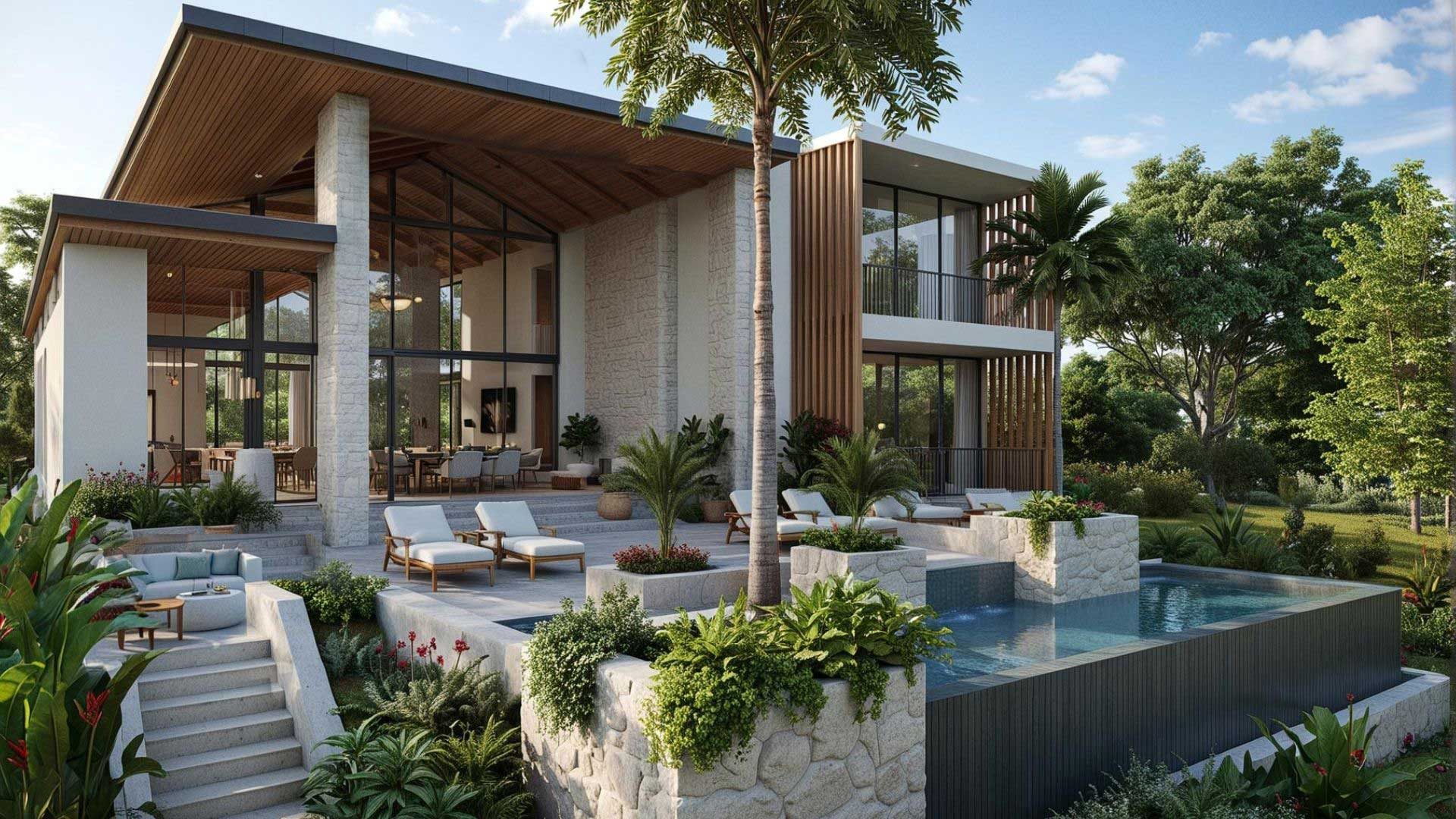
- Käza House, Puerto Viejo de Guanacaste. The villas stand on a steel structure raised above the ground. A frame like this is the kind of approved system that can take non-bearing earth or bahareque infill, because the structure does not depend on the walls.
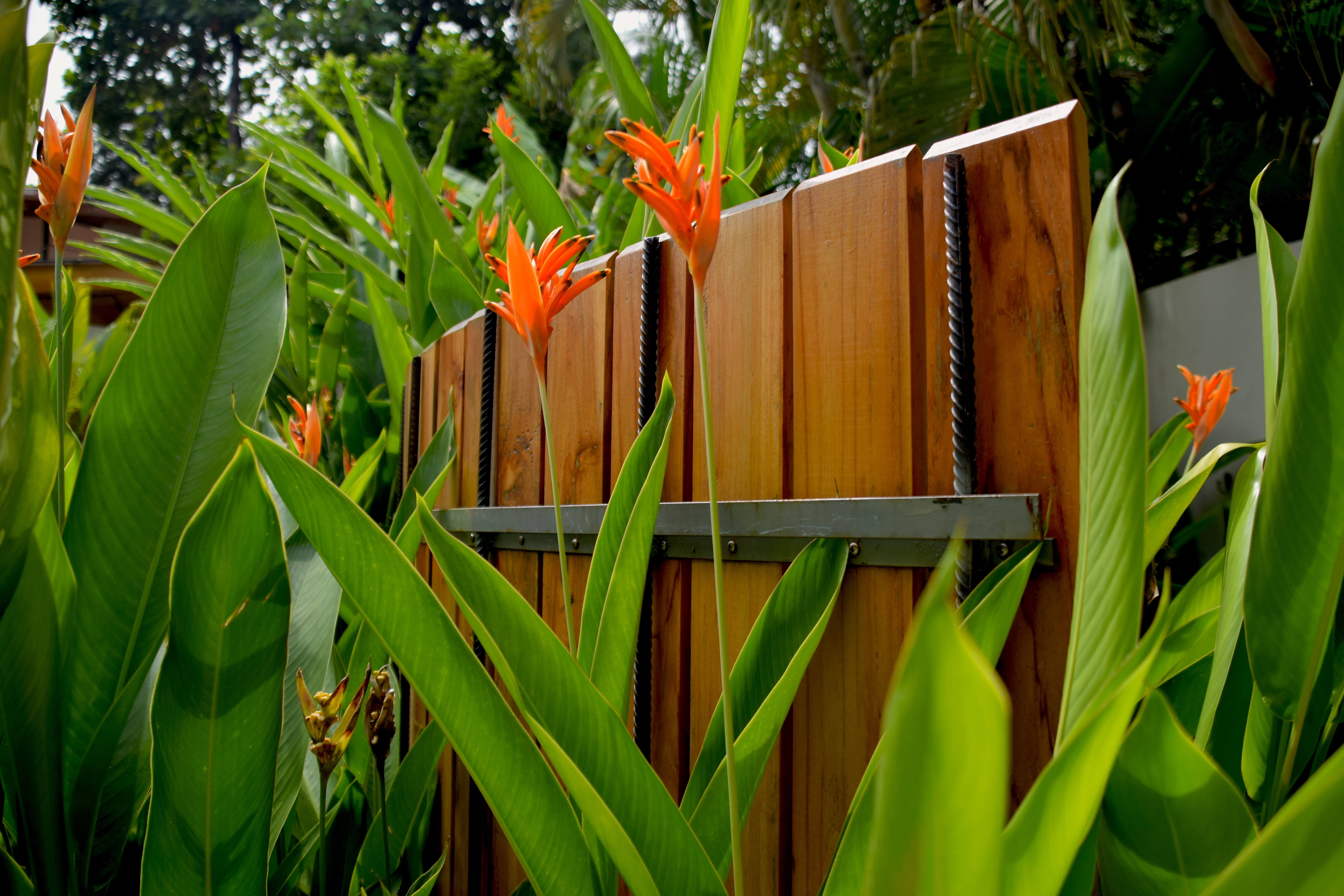
- Timber on the coast. For exterior timber we use teak, laurel or pochote and plan maintenance at least once a year. Bahareque frames need the same attention to species and protection from rain.
We work across Costa Rica, and the climate changes what earth is asked to do. In Arenal, with more rain, the priority is protecting the wall; on the dry coast of Puerto Viejo de Guanacaste or Flamingo and Potrero, thermal mass does more of the work.
Frequently asked questions
- Código Sísmico de Costa Rica, CFIA
- CFIA, Colegio Federado de Ingenieros y de Arquitectos de Costa Rica
- Universidad de Costa Rica