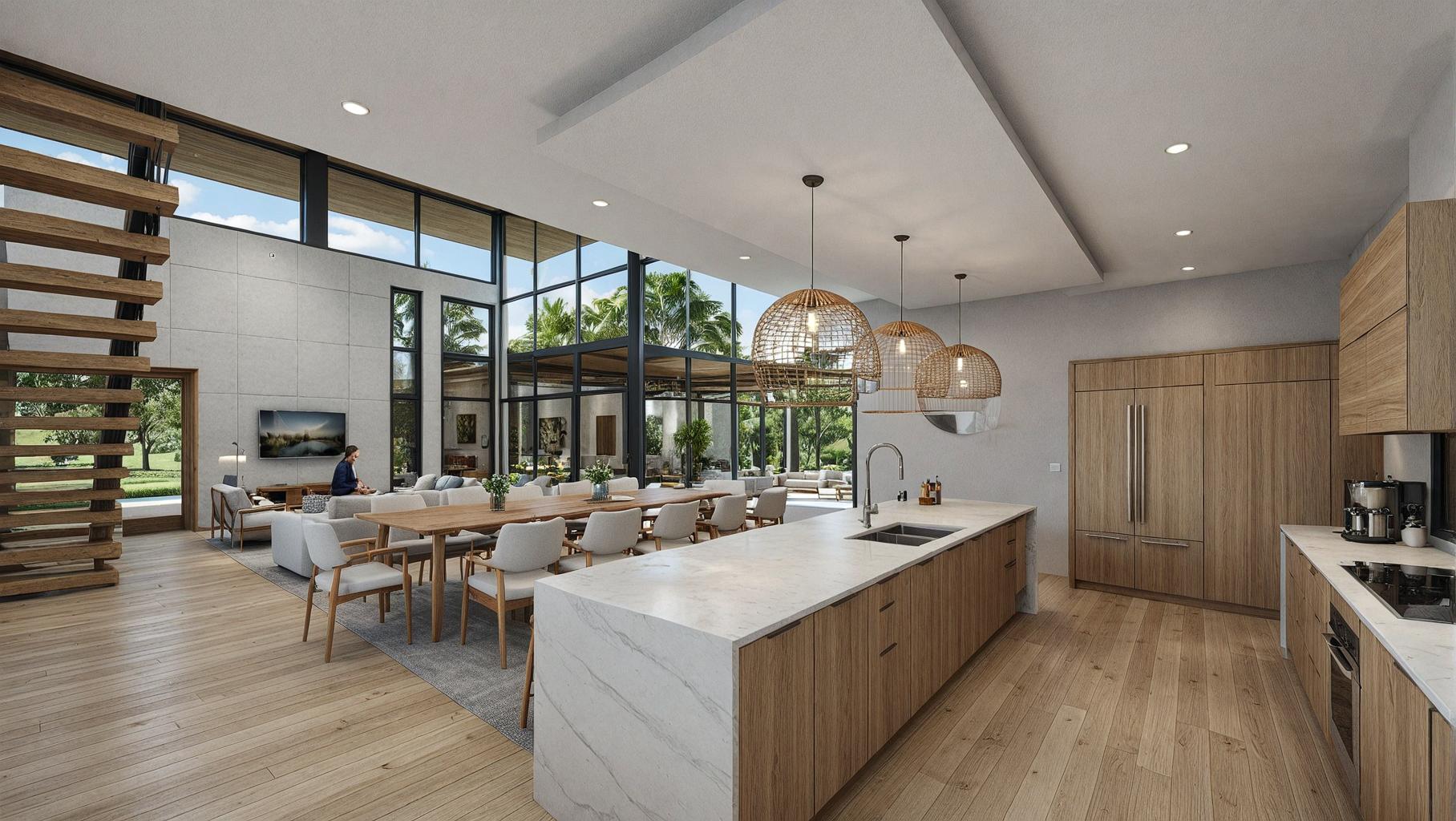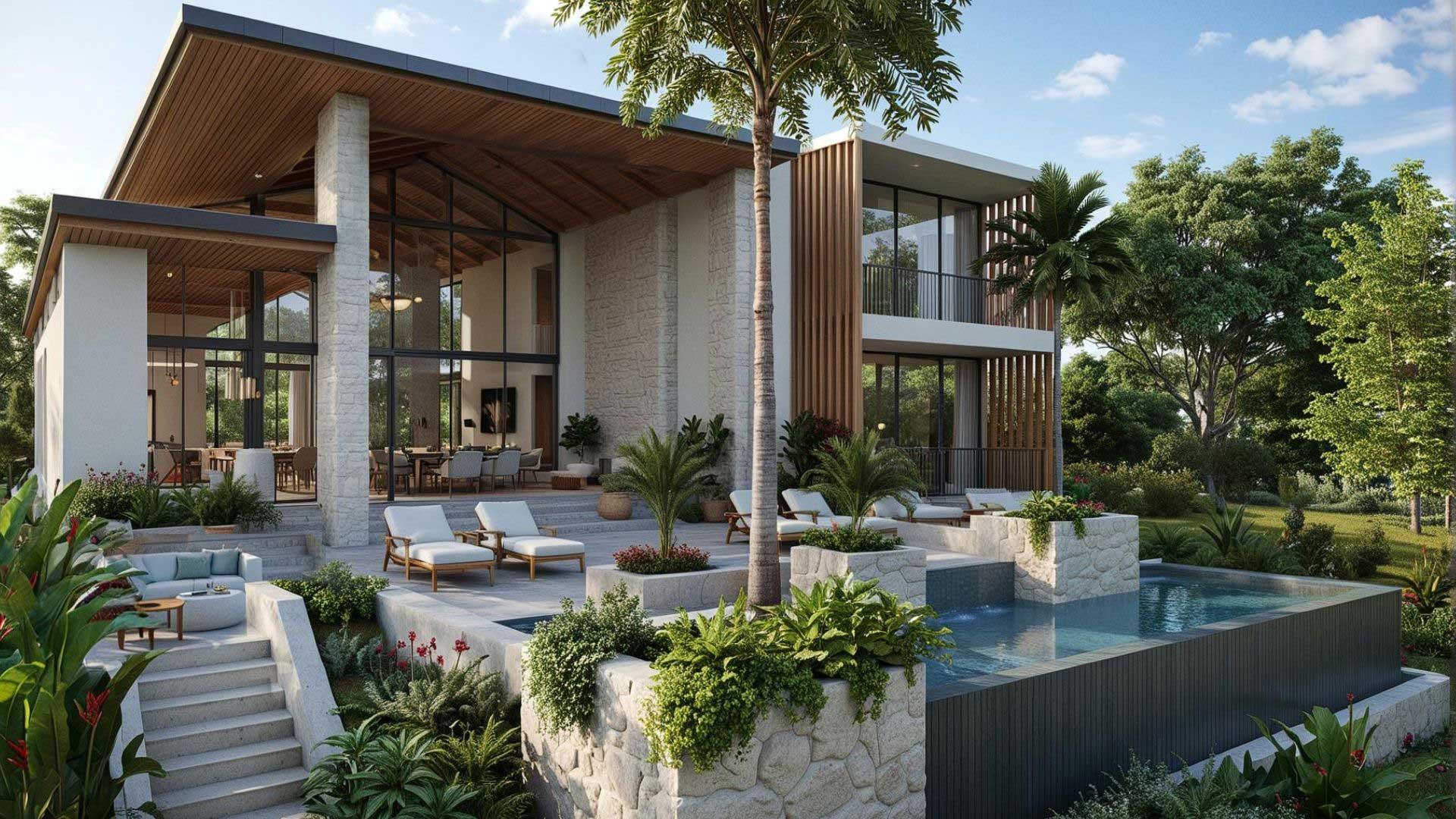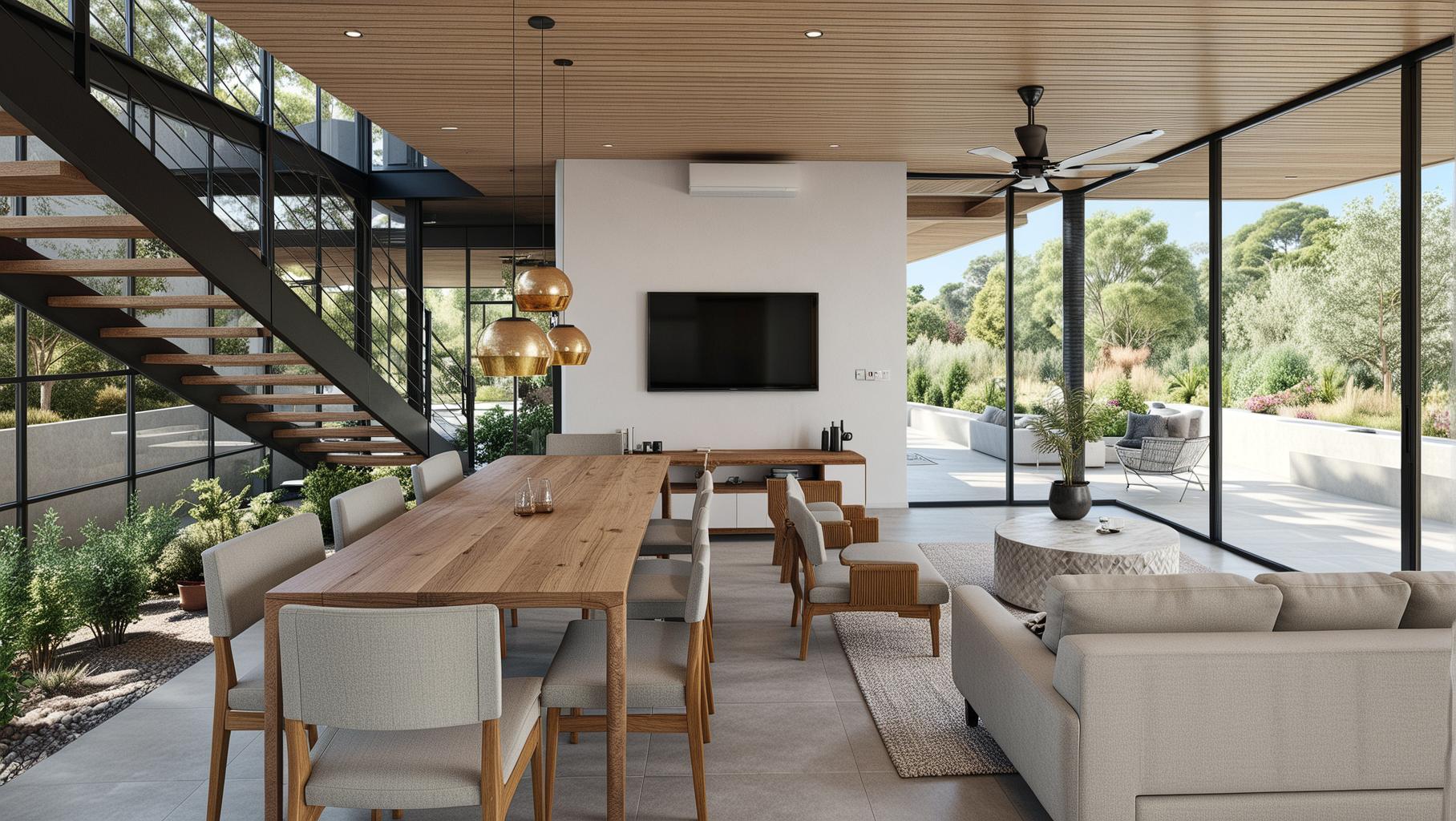
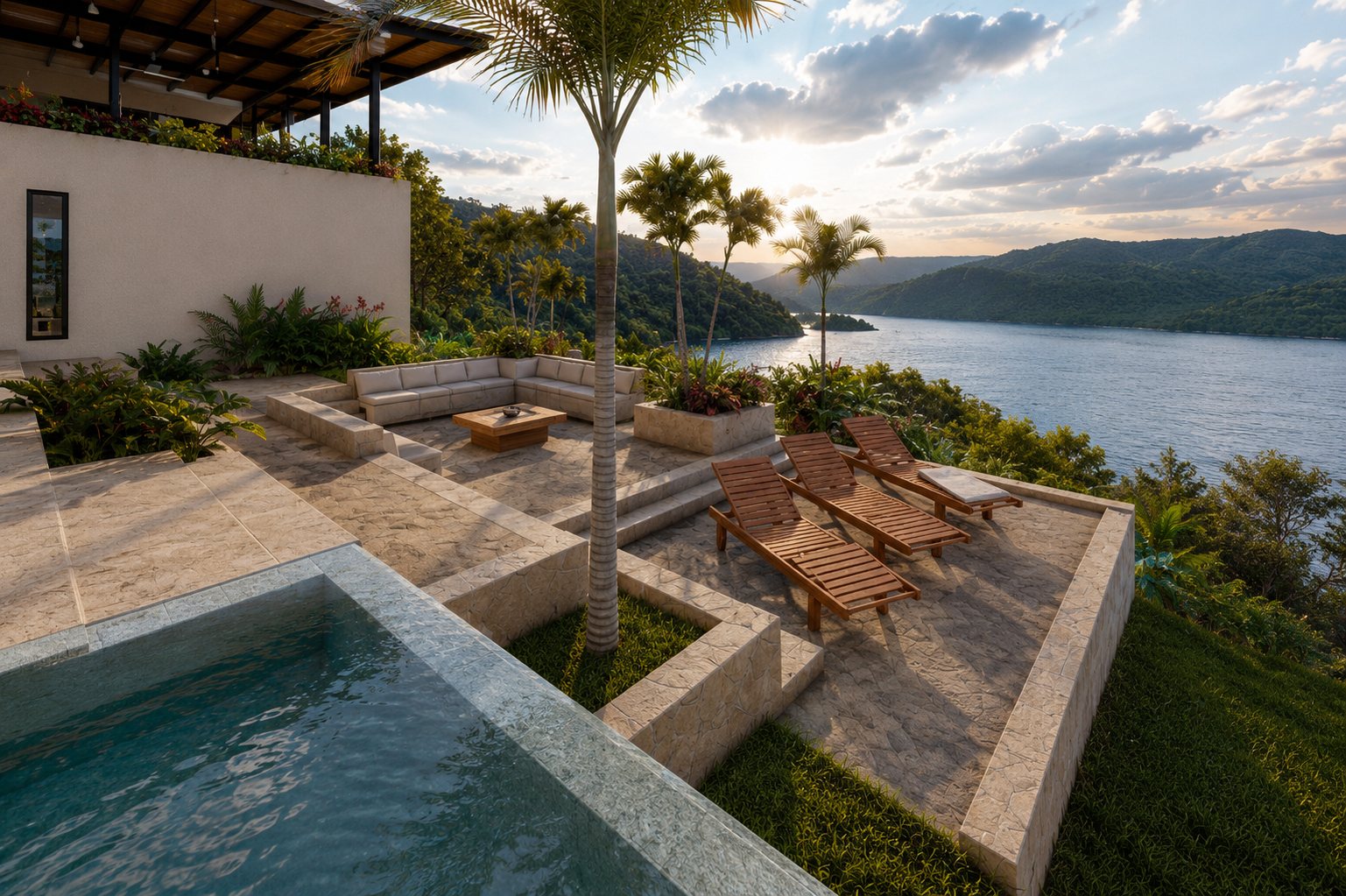

A contemporary tropical modern house is built for heat, sun and heavy rain: deep eaves, shaded semi-covered rooms, cross-ventilation and a close link to the garden. In Guanacaste that keeps the house comfortable with far less reliance on air conditioning. The style is a response to climate first, and the modern look follows from those decisions.
What is contemporary tropical modern architecture?
It is modern architecture adapted to a warm, humid climate. Clean lines and open plans stay, but orientation, shade and air movement lead the design.
In Costa Rica the style also takes from local building traditions: generous roofs, galleries between inside and outside, and materials such as wood and stone that sit well in the landscape. The result reads as contemporary, yet each of its main features exists to deal with sun or rain.
That is the reason to choose it. A house that follows the climate is more comfortable and cheaper to run than one that fights it with machines.
Why does it suit the climate of Guanacaste?
Guanacaste has strong sun, a long dry season and heavy rain for part of the year. Tropical modern design answers all three with orientation, shade and cross-ventilation.
Openings are placed to catch the prevailing breeze and let it cross the house. Direct sun is kept off walls and glass with eaves, pergolas and planting. At the Currie Residence in Hacienda Pinilla, cross-ventilation runs through most of the house, and the openings toward the south are small and fitted with sunshades. Every room opens instead to a central courtyard, which stays shaded and private.
The same logic sets the section. High ceilings let warm air rise, and semi-covered spaces give you outdoor rooms that are usable at midday.
How does a tropical modern house handle rain and humidity?
With long eaves, raised floors where the lot needs them, and a drainage plan drawn with the house. Water is the other half of the tropical climate, and it needs as much design as the sun.
At Käza House in Puerto Viejo de Guanacaste, studies of wind, rain and sun set the long eaves, the white reflective roofs and the rainwater harvesting. The villas stand on a steel structure above the ground, so they follow the natural contours of the lot and let water run beneath them.
In Arenal the conditions change. It is mountain land with good drainage, and the answer at Casa El Sueño is a careful drainage layout, with the lines kept away from the house and running with the slope. The same style adapts to rain, humidity and forest instead of sea and sun.
| Climate condition | Design answer | Where we applied it |
|---|---|---|
| Strong sun | Eaves, pergolas and planting; small south openings with sunshades | Currie Residence, Hacienda Pinilla |
| Heat | Cross-ventilation, high ceilings, semi-covered rooms | Currie Residence, Hacienda Pinilla |
| Heavy rain on the coast | Long eaves, white reflective roofs, rainwater harvesting, villas raised on a steel structure | Käza House, Puerto Viejo de Guanacaste |
| Mountain rain and forest | Drainage lines kept away from the house and running with the slope | Casa El Sueño, Arenal |
Which materials work best on the coast?
Wood, stone and concrete, chosen for their exposure. Wood brings warmth to the house, but it needs care.
For exterior timber we use teak, laurel or pochote, choosing by grain and colour. Each needs maintenance at least once a year, and more often on floors or very exposed areas. If you prefer no maintenance, WPC (recycled wood-plastic composite) or factory-pretreated wood are the alternatives, with a life of 20 to 30 years according to the supplier.
Where the project allows it, we also build with natural materials such as rammed earth and bahareque, combined with structural systems approved under the Costa Rican Seismic Code. These walls add thermal mass, which helps keep interiors stable through the hot hours.
How does the house connect to the garden?
Through transitional spaces: galleries, covered terraces and courtyards that are neither fully inside nor outside. They are where most of daily life happens in a tropical house.
At Casa Cielo in Tamarindo a semi-covered gallery links every room around a fountain and the pool, and the house opens step by step toward the views of the Langosta estuary. At Akari, near Playa Flamingo, the house opens onto its own gardens, which give it privacy and fresh air. In both cases the landscape was designed with the architecture, not added at the end.
What we've seen on our projects
The decisions that make a house tropical are usually decided in the first weeks of design. These come from our own projects.
- Akari, Flamingo and Potrero area. Designed for the climate of Guanacaste: the house opens onto its own gardens, which give it privacy and fresh air, and relies on natural light and cross-ventilation for comfort.
- Water Pump Solutions, Huacas. The same tropical language applied to a commercial building, in one calm, ordered volume that sits easily in its setting.
Does a tropical modern house cost more to build?
Not by itself. The price per square meter depends much more on the zone, the slope and the finishes than on the style.
There is one detail to keep in mind. In Costa Rica the construction area counts every covered surface, so galleries and covered terraces add to the total even when they are open on the sides. A tropical house tends to have more of them, and the budget follows. Our guide to building costs in Guanacaste has the ranges by zone. For the conditions of each place, see the pages on Tamarindo and Playa Grande, Puerto Viejo de Guanacaste and Flamingo and Potrero, or our architectural design service.