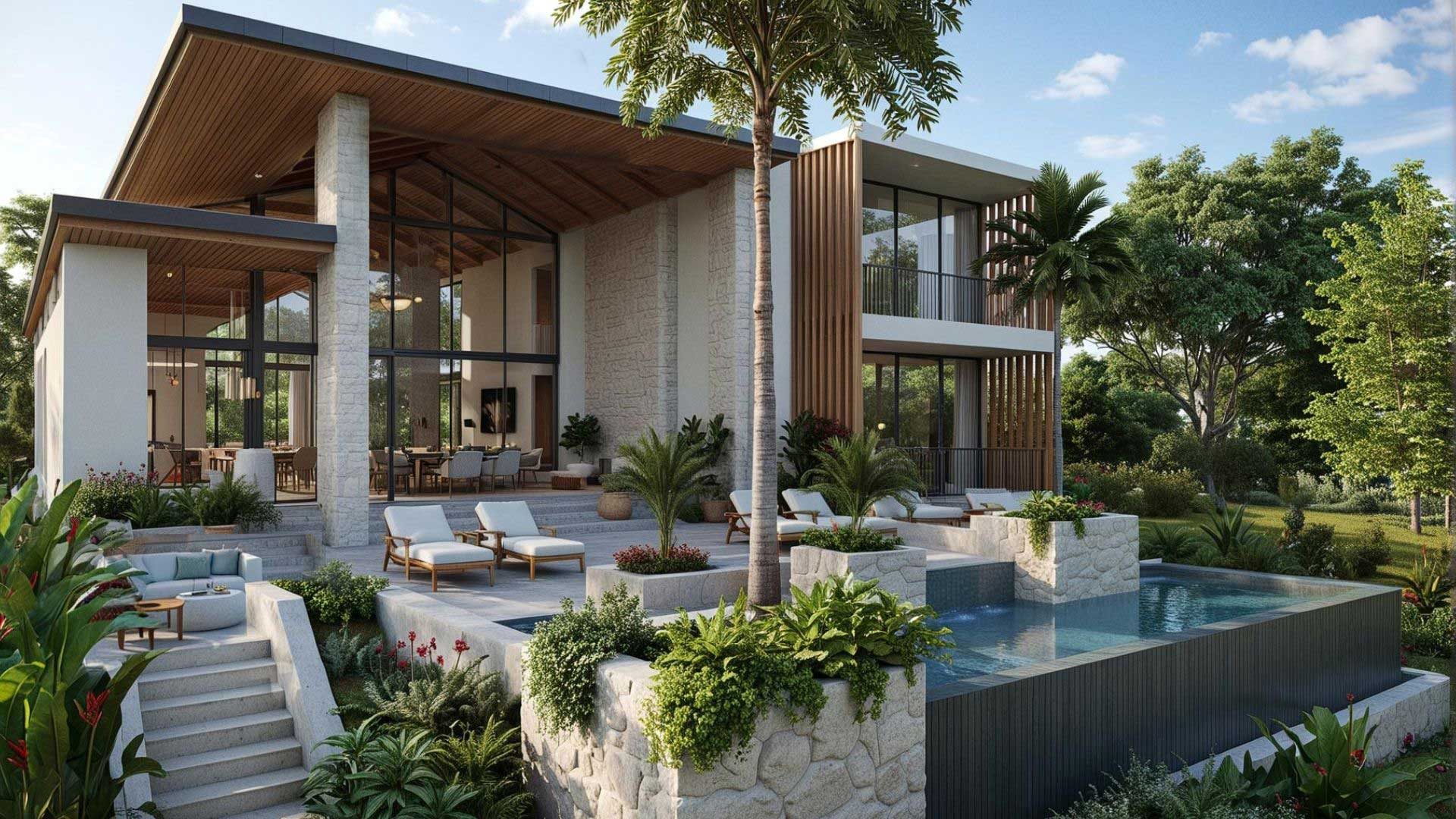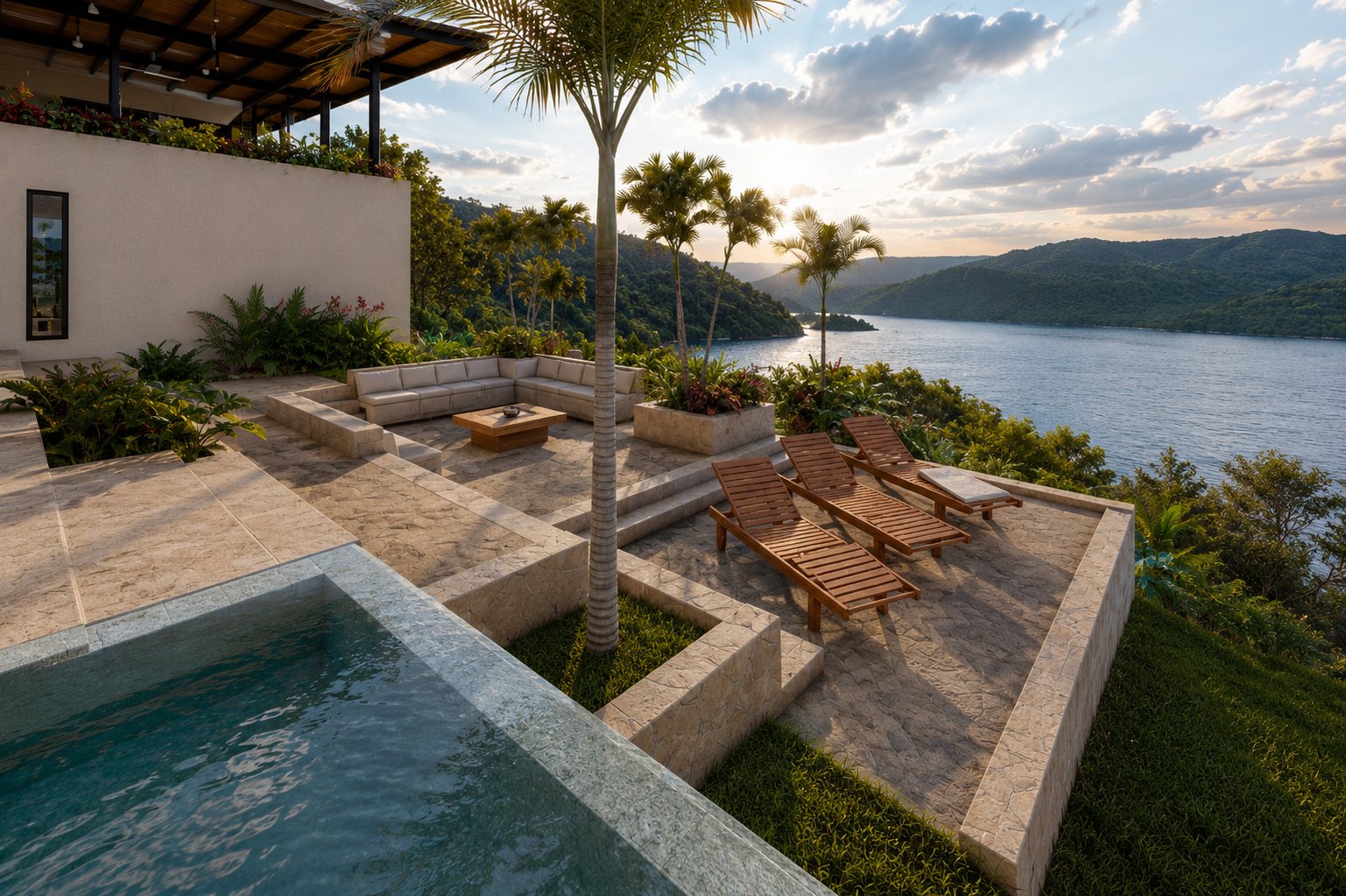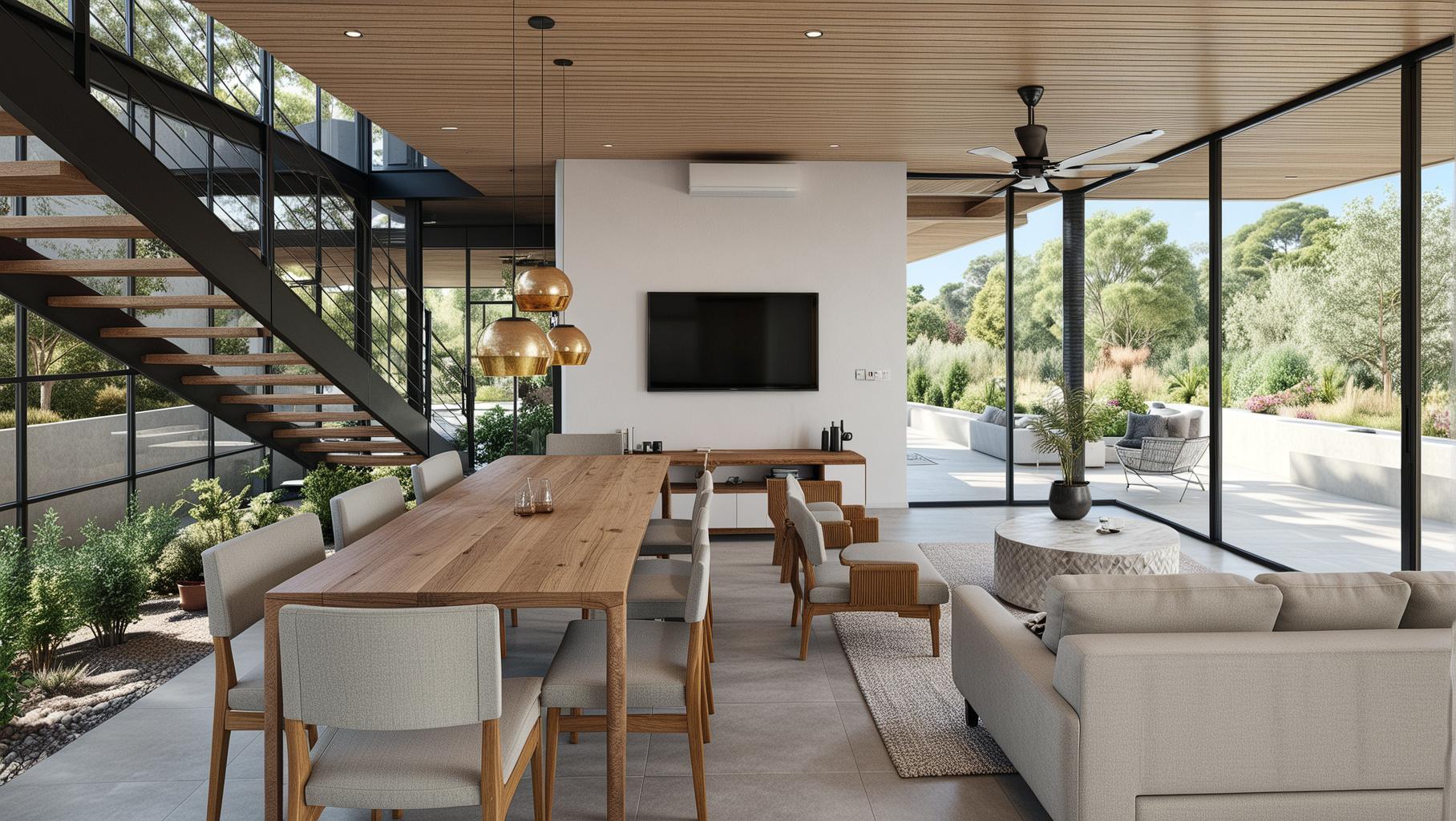

Designing inside a conservation corridor means the forest sets the rules. In Playa Grande we place the house around the existing trees, plant native dry forest species, keep the built footprint small and the ground permeable, and use low, red lighting near the beach. Water is the real limit: the local ASADA is not giving new availability.
What is a dry forest corridor, and why does it change the design?
A corridor is a continuous strip of habitat that lets animals and plants move between larger patches of forest. When a lot sits inside one, the house has to leave that continuity intact, and that affects where it goes, how big it is and how it is lit.
Tropical dry forest is the native forest of the Guanacaste coast. It loses much of its foliage in the dry season and grows back with the rains, and it has been reduced to fragments along much of the coast. Keeping those fragments connected is what gives the fauna room to move.
We are working in The Playa Grande Corridor, which according to its website presents itself as a sanctuary of tropical dry forest and coast that aims to protect biodiversity and habitat connectivity. This article is about the principles that kind of project asks of the architecture, not about the development itself.
How do you design a house around the existing trees?
We survey the trees before drawing anything and place the house in the gaps between them. The trees that give shade, frame a view or form part of the canopy stay; the building adapts.
That usually means breaking the program into smaller volumes instead of one large block, so each piece fits in a clearing. Terraces and paths go around the roots, and foundations are placed where they do not cut them. A mature tree gives shade from the first day, which a new one will take years to do.
| Principle | What it means on the lot |
|---|---|
| Keep the existing trees | Survey first; place volumes, paths and foundations around them |
| Native planting | Dry forest species at the edges and in the larger areas |
| Low, shielded lighting | Red light near the beach, fixtures aimed down |
| Small footprint | Compact, broken-up volumes and less paved area |
| Permeable ground | Gravel and stepping-stone paths instead of slabs |
| Water as a limit | Low-water garden; confirm availability before design |
Which plants belong in a dry forest garden?
Native species of the dry forest. They survive months without rain, need little irrigation once established and feed the birds, butterflies and hummingbirds that move along the corridor.
Ornamental species can still have a place, close to the house and in small areas. The larger part of the lot, and especially its edges, should read as forest, so the garden continues the habitat instead of interrupting it. Our landscape design service works from a planting plan and an irrigation plan drawn together.
What kind of lighting is allowed near the beach?
Near the beach in Playa Grande, within the maritime terrestrial zone, SINAC requires red lighting so the lights do not disturb nesting turtles. Further inland the same logic still works for the rest of the fauna: less light, lower down.
We design the lighting plan with the architecture. Low bollards along the paths, fixtures aimed at the ground or at a specific tree, and no light facing the sea or spilling into the canopy. Planting also works as a screen between the house and the beach.
Why is water the real limit in Playa Grande?
Because the ASADA of Playa Grande is in technical non-feasibility: it is not giving new availability letters, and there is no date for it to resume. Without a valid letter there is no building permit.
Condominiums in Playa Grande resolve water with their own well and manage availability for their lots. For any lot, the first step is to confirm the water before buying and before design. It also shapes the garden: a landscape that depends on heavy irrigation is hard to justify where water is this tight. Our article on water for building lots in Guanacaste covers the situation zone by zone.
How small should the footprint be, and which materials fit?
As small as the program allows, with the ground around it left permeable. Every square metre of roof and paving is a square metre that stops being forest floor and sends rain water elsewhere.
Gravel paths, stepping stones and decks raised on points let water soak in and keep roots undisturbed. Lots in Playa Grande range from 1,000 to 1,500 m², and under Las Baulas Marine National Park the minimum is 1,500 m², so a compact plan leaves a real share of the lot as habitat.
Natural materials fit the same approach. Timber, stone and earth have a lower embodied energy and age well in this setting. Earth walls cannot carry the structure in Costa Rica, but they can close it; see our article on building with earth.
What we've seen on our projects
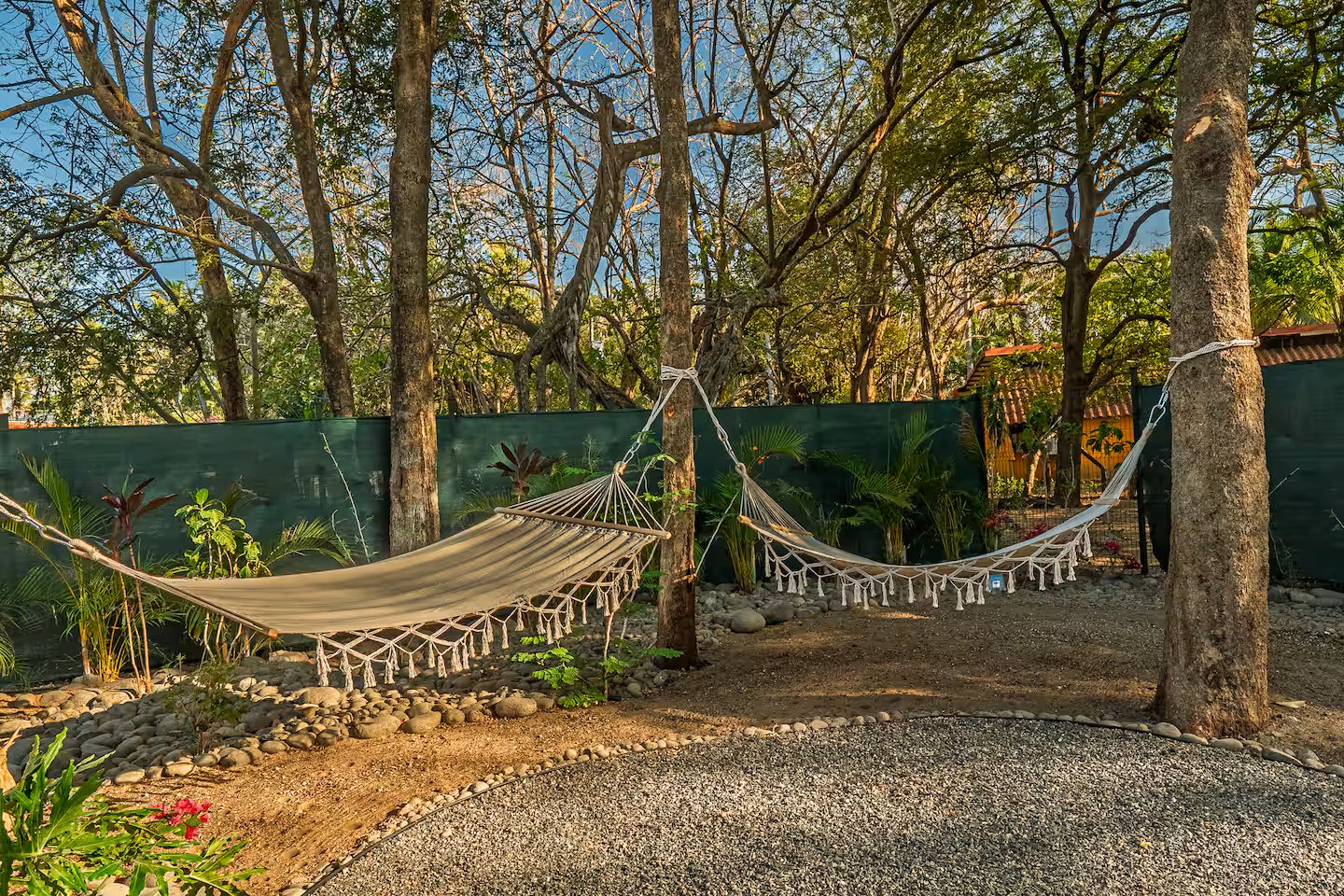
- Villa Viva, Playa Grande, 2026. The dry forest trees on the lot were kept and the hammocks hang between them. Paths are stepping stones on gravel edged with river stone, and at night low bollards mark the way.
- Relajarse, Playa Grande. Inside Las Baulas Marine National Park, the native species brought birds, butterflies and hummingbirds into the garden, and stone and sand paths connect the rooms without paving the ground.
We work across Costa Rica. Playa Grande is part of our Tamarindo and Playa Grande area; the same water limit applies further south in Puerto Viejo de Guanacaste, where the Matapalo ASADA is also in non-feasibility.
Frequently asked questions
- SINAC, Sistema Nacional de Áreas de Conservación
- ASADAS, asociaciones administradoras de acueductos comunales
- Ley 6043, Ley sobre la Zona Marítimo Terrestre